Eyes Peeled
Thom Flynn
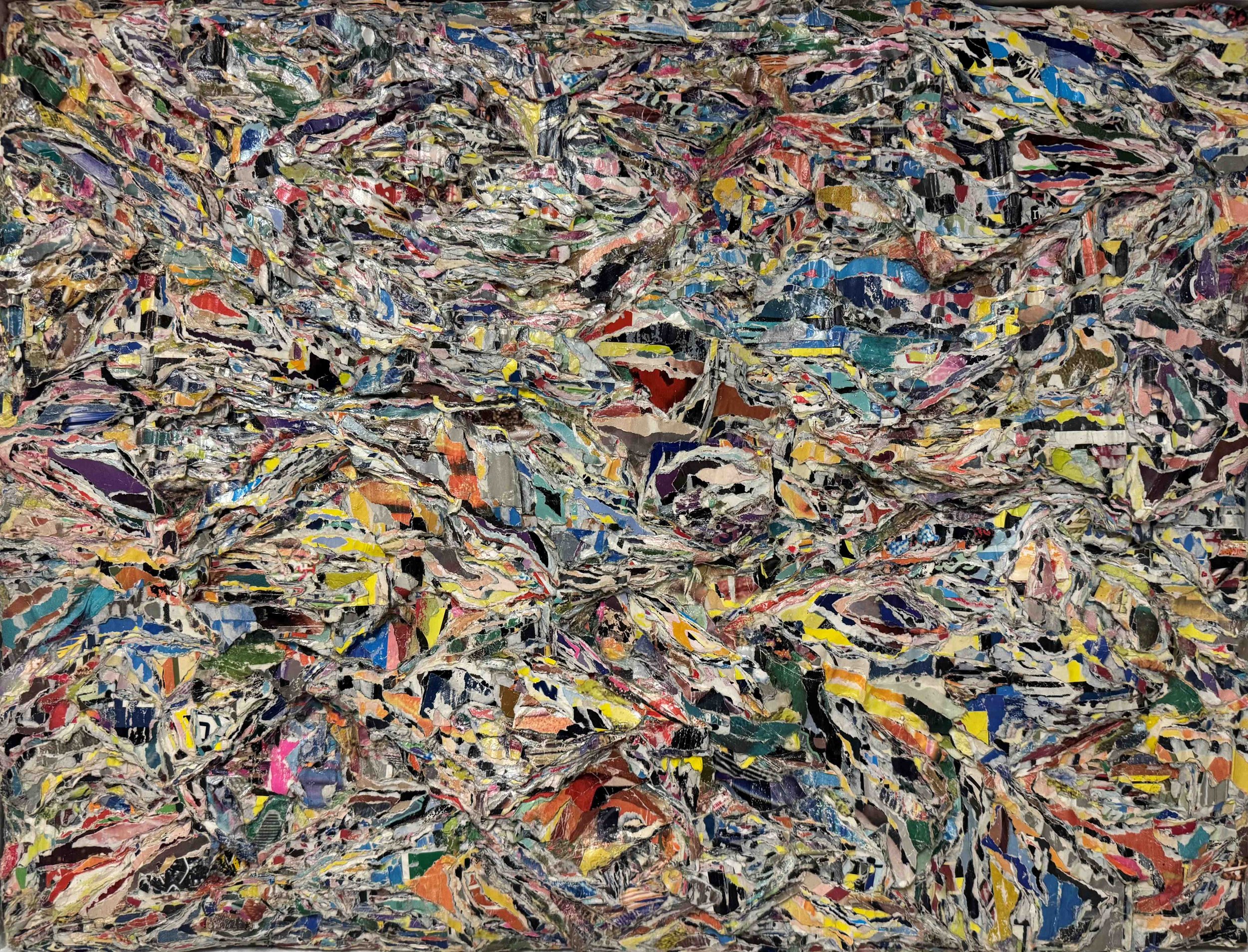
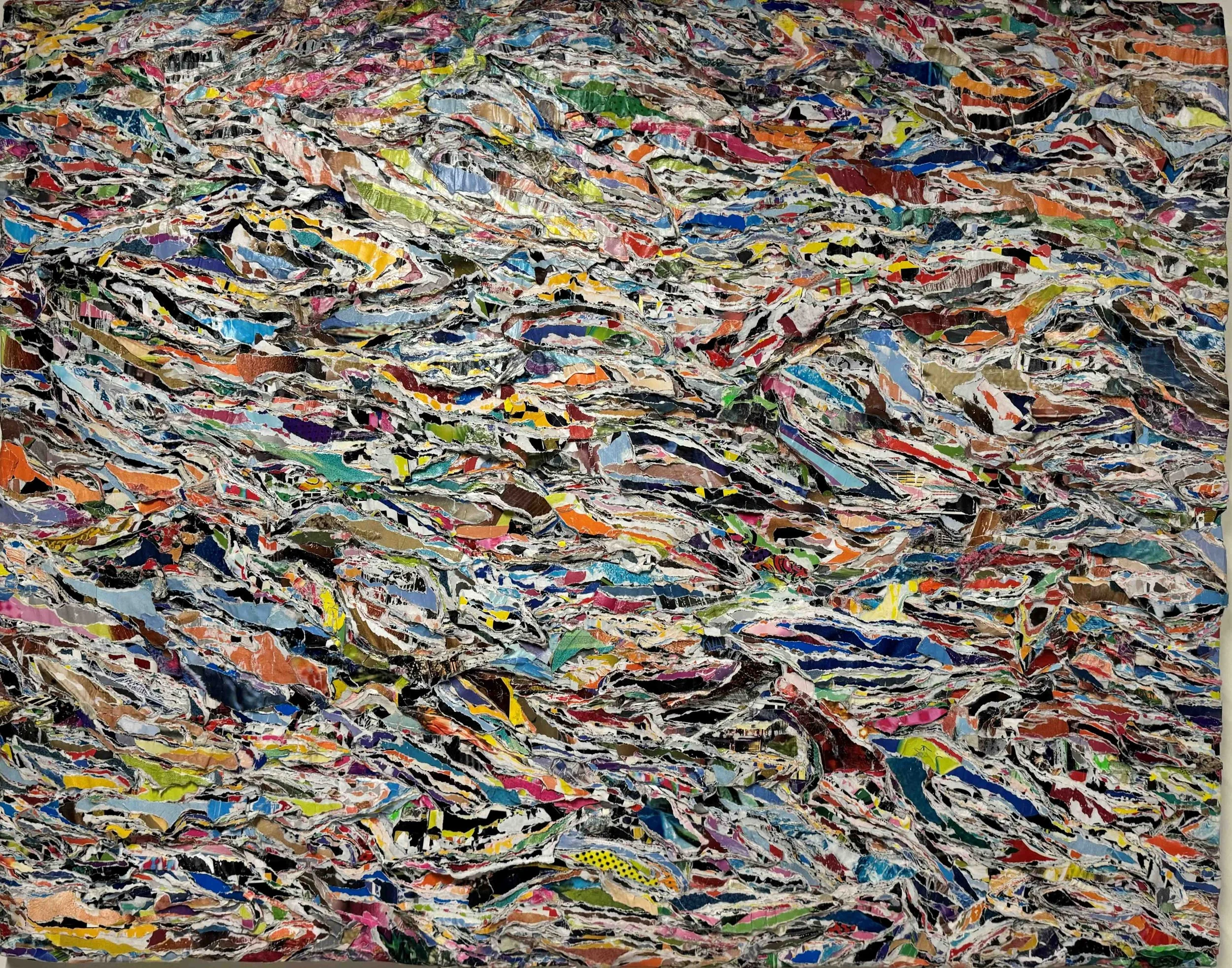
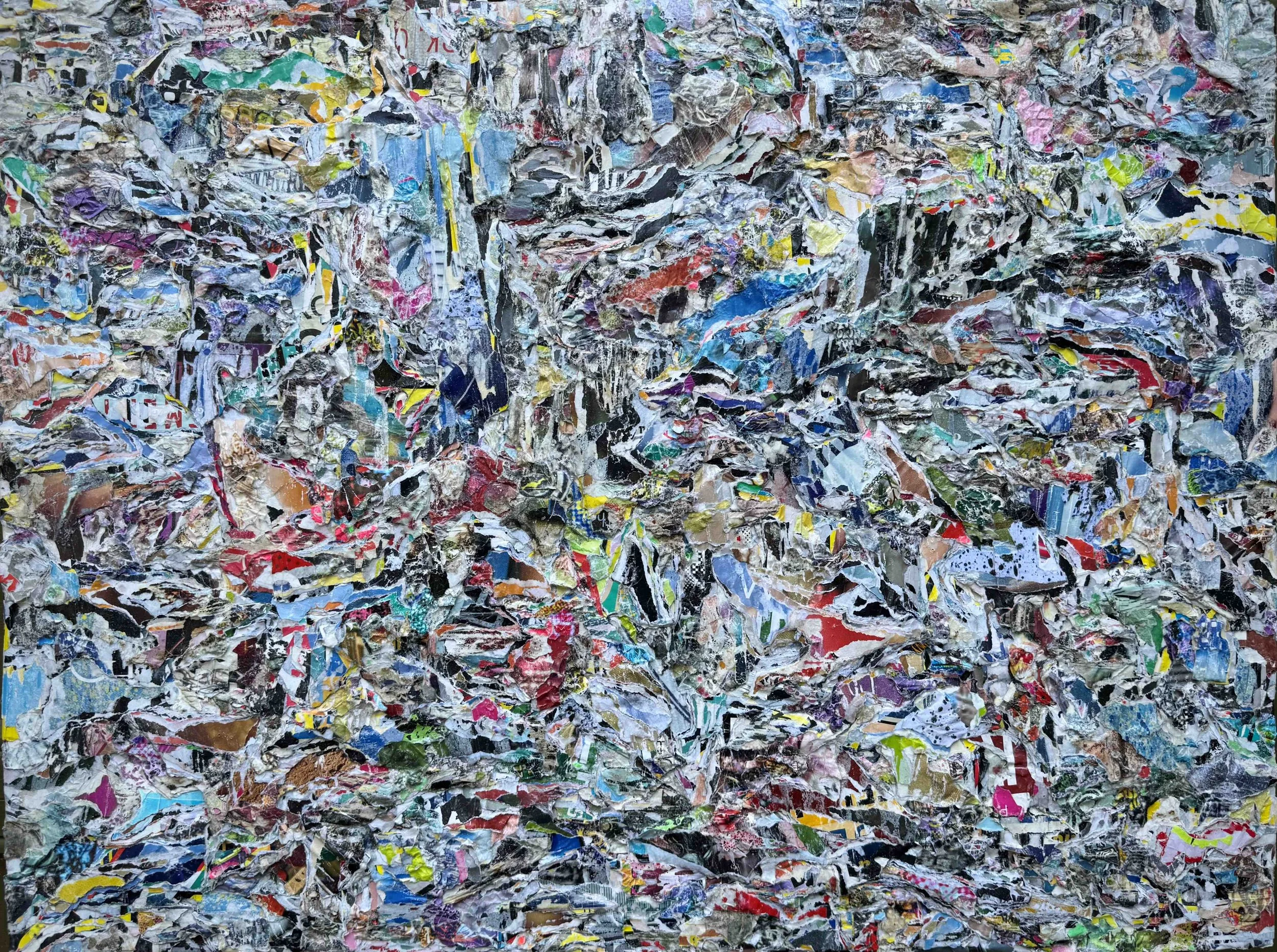
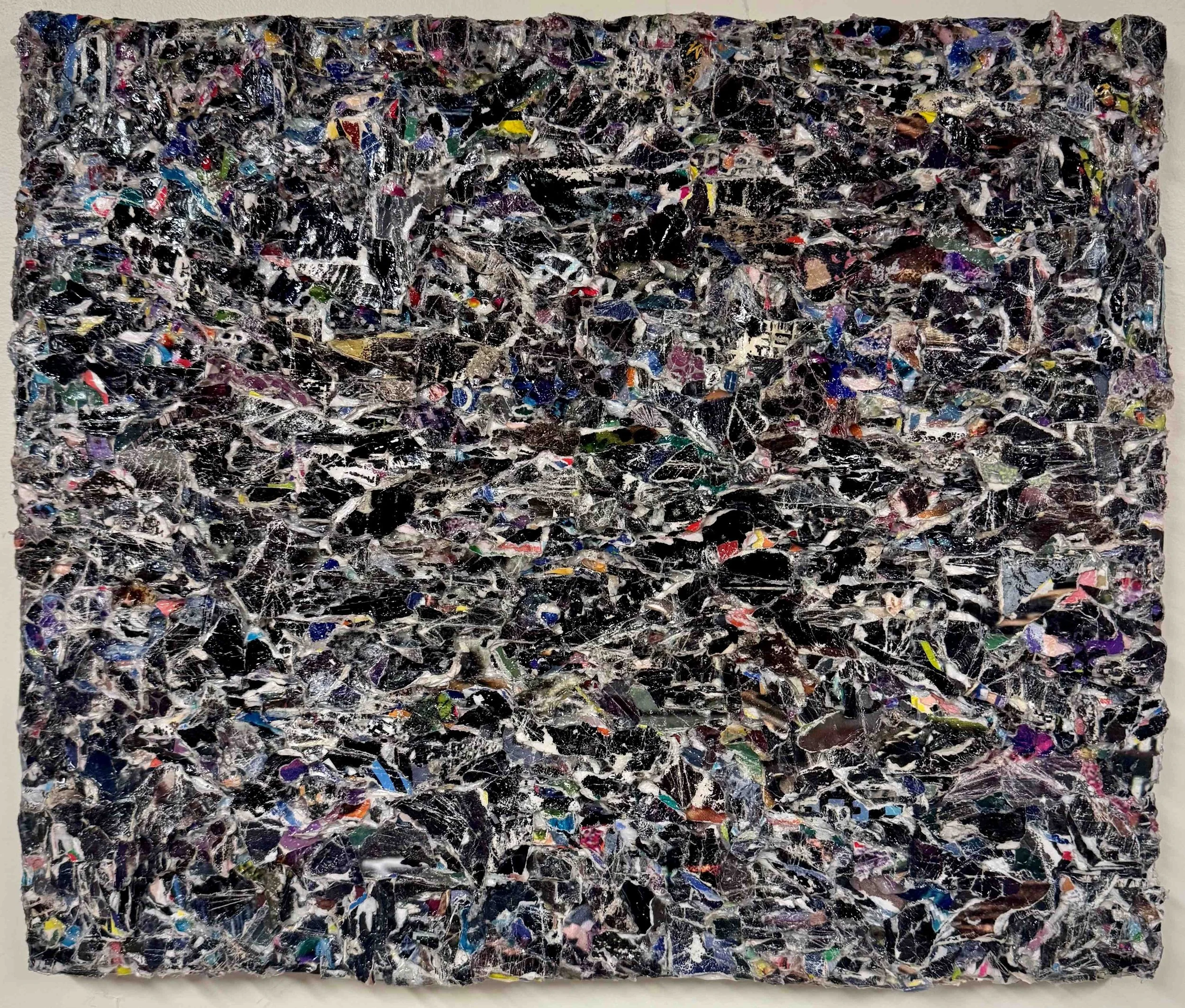
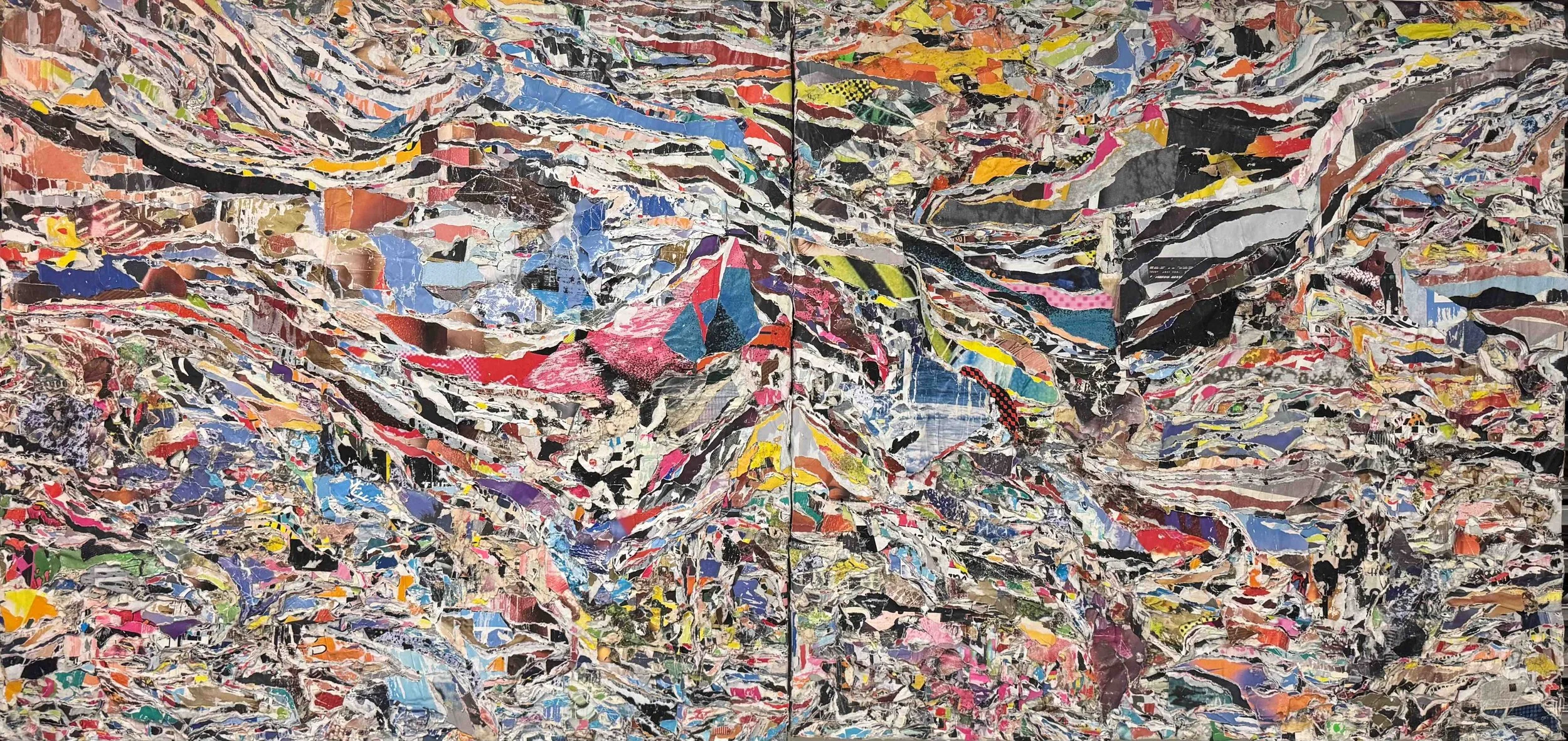
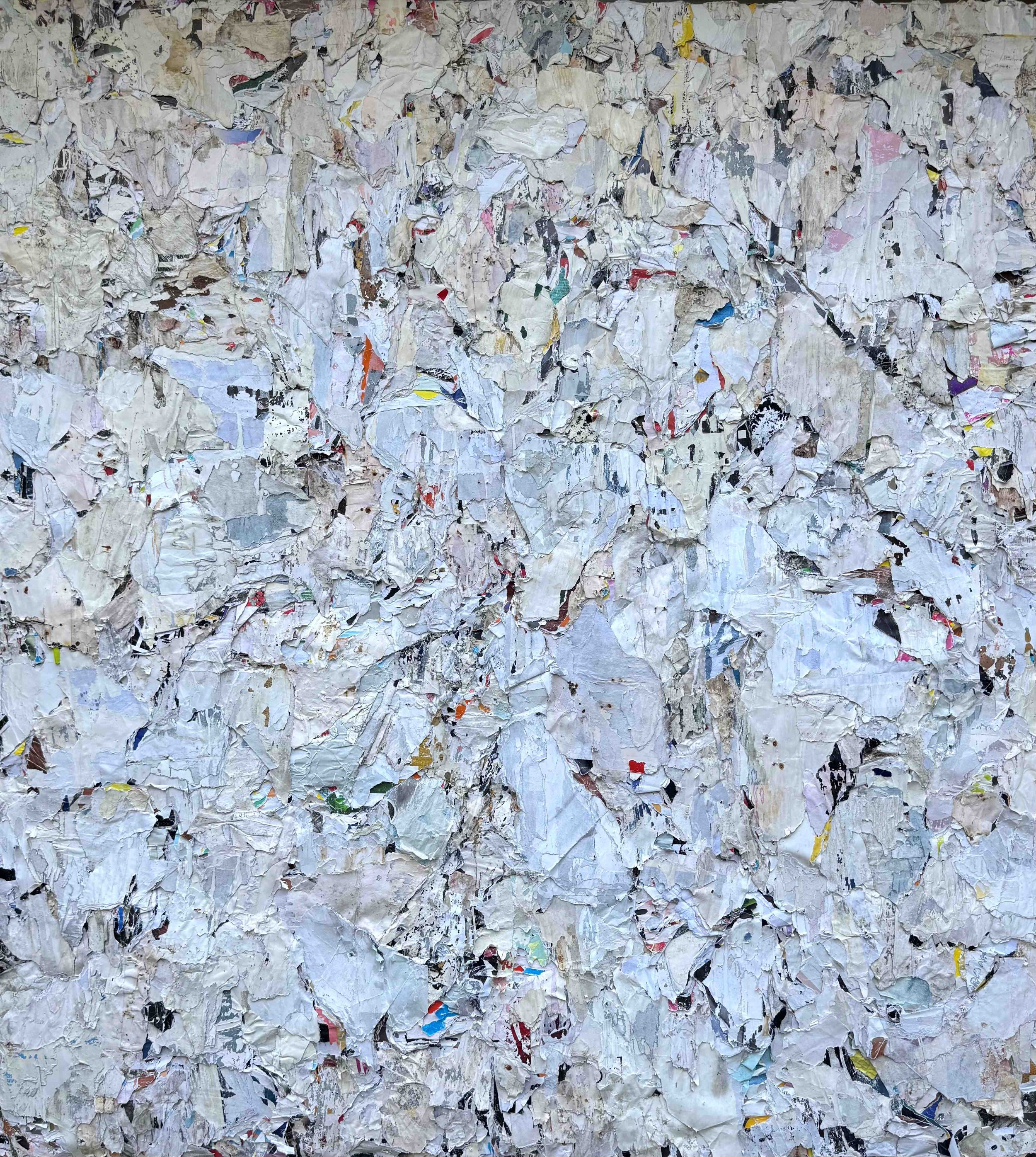
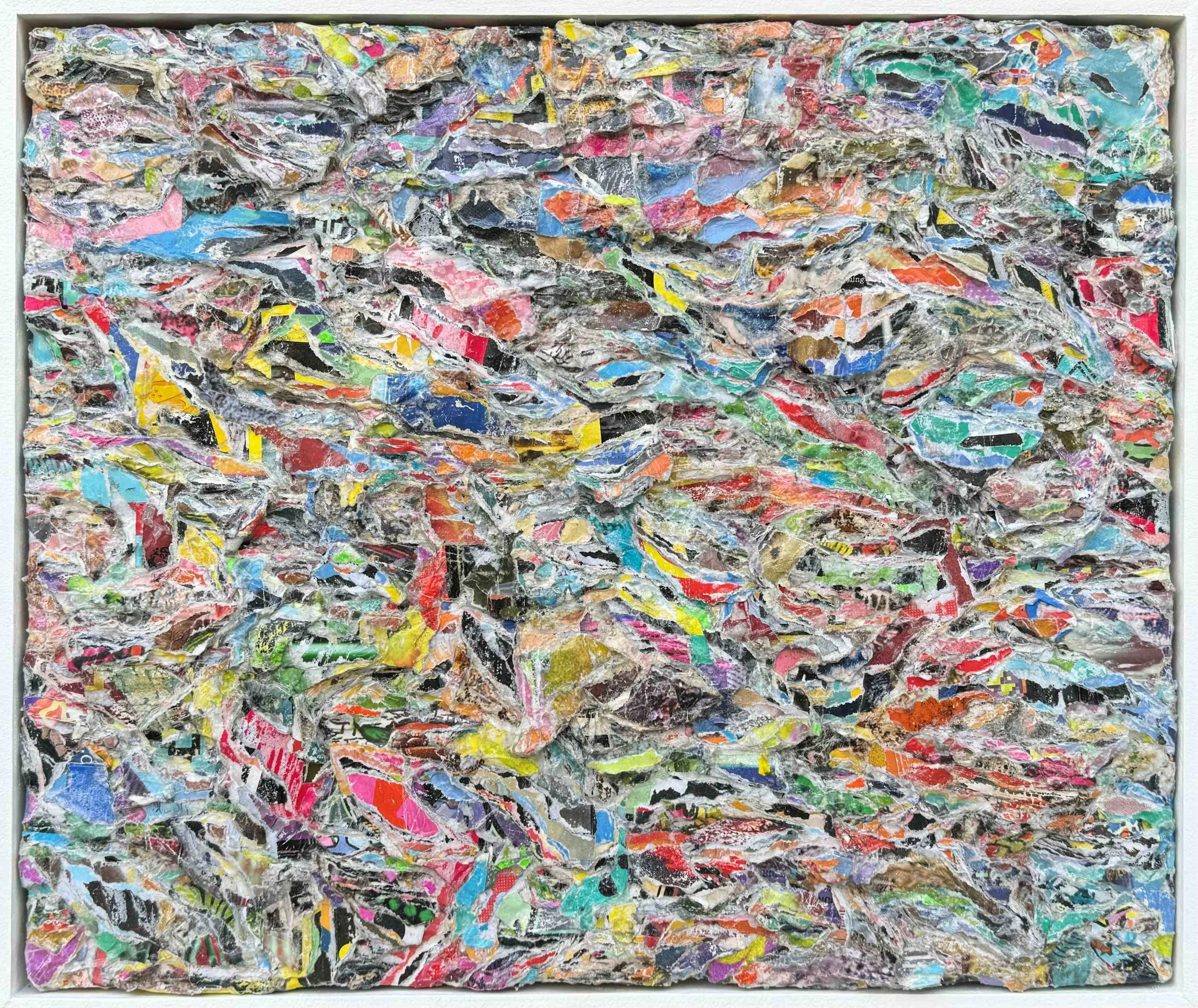
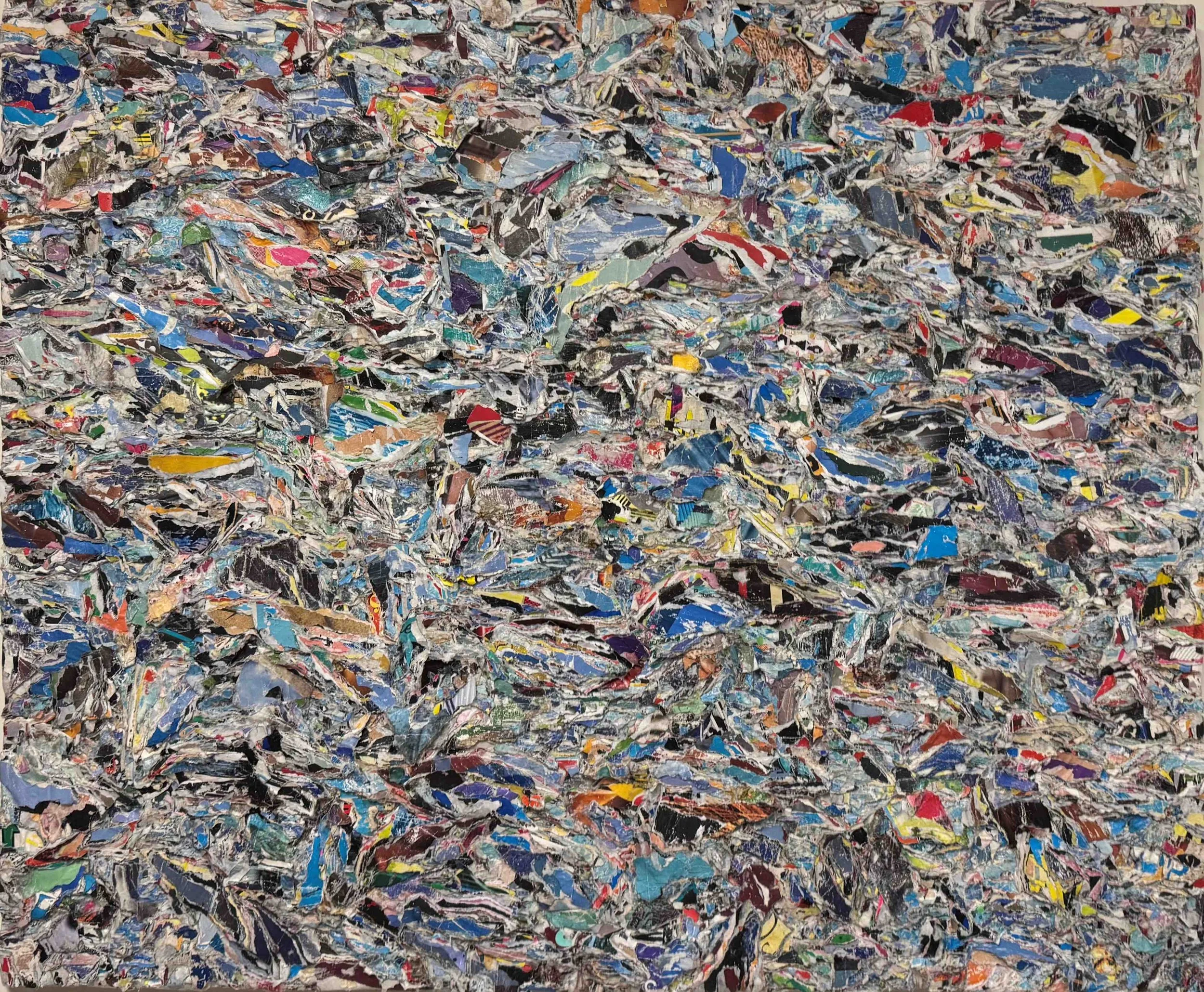
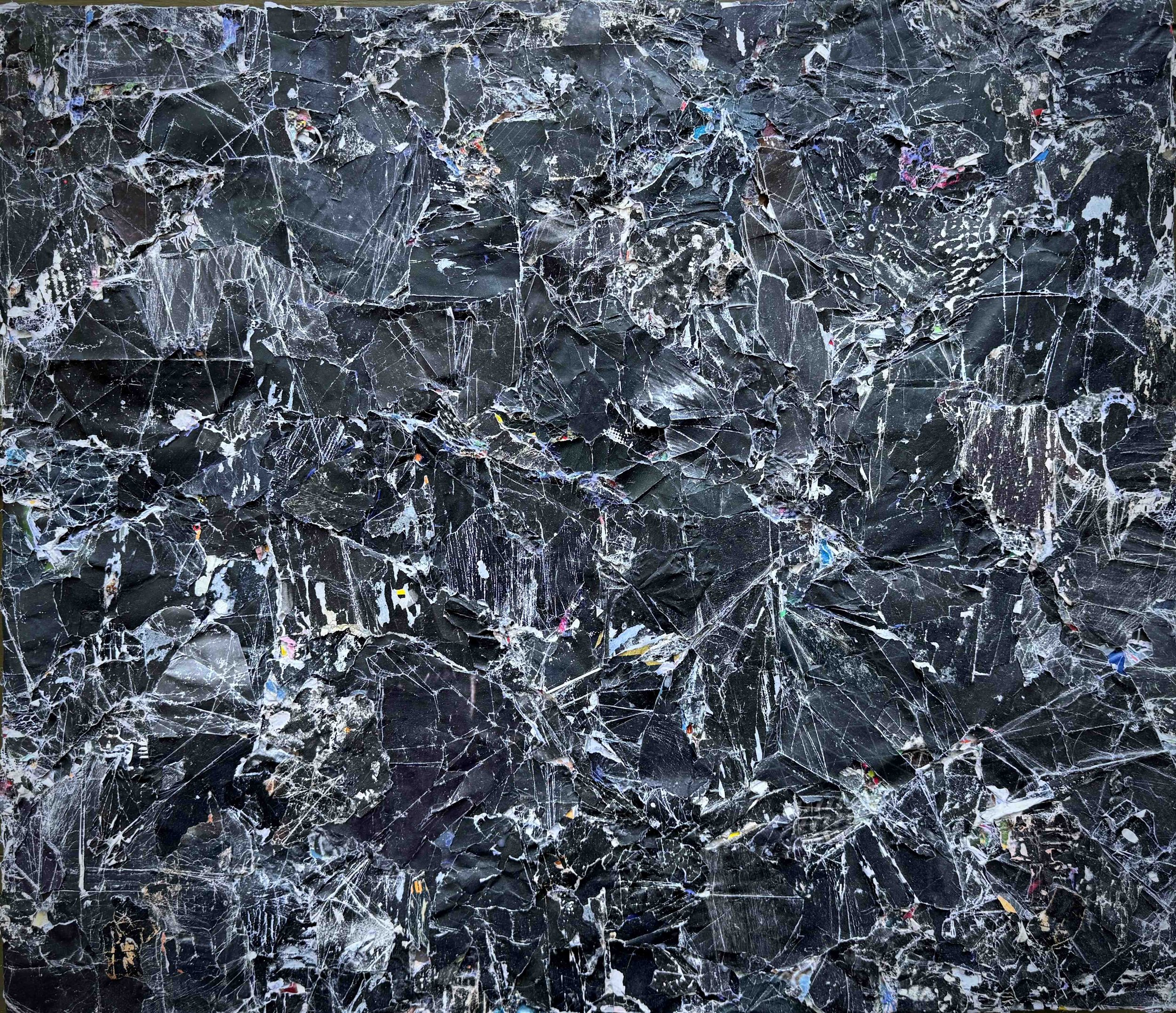
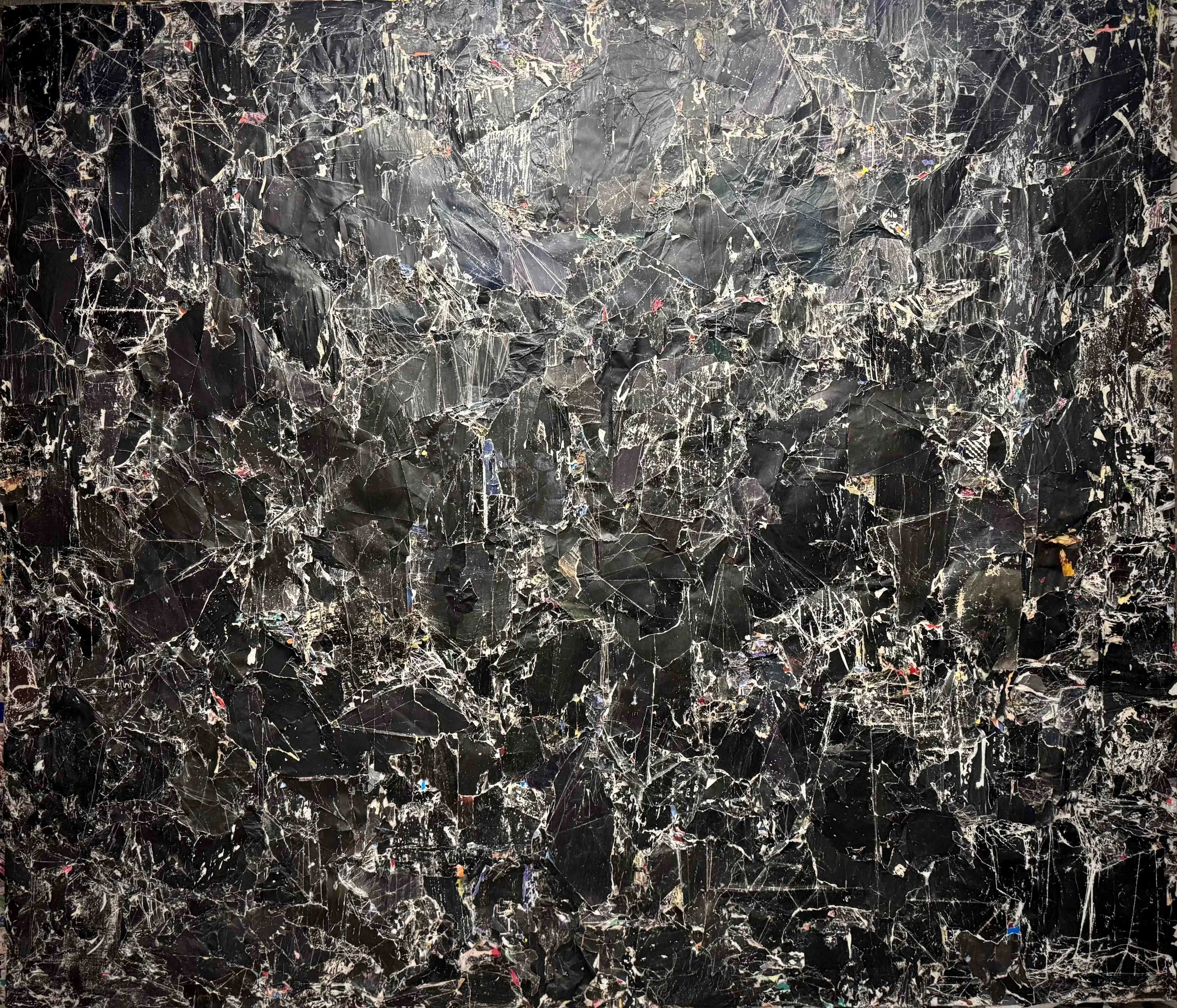
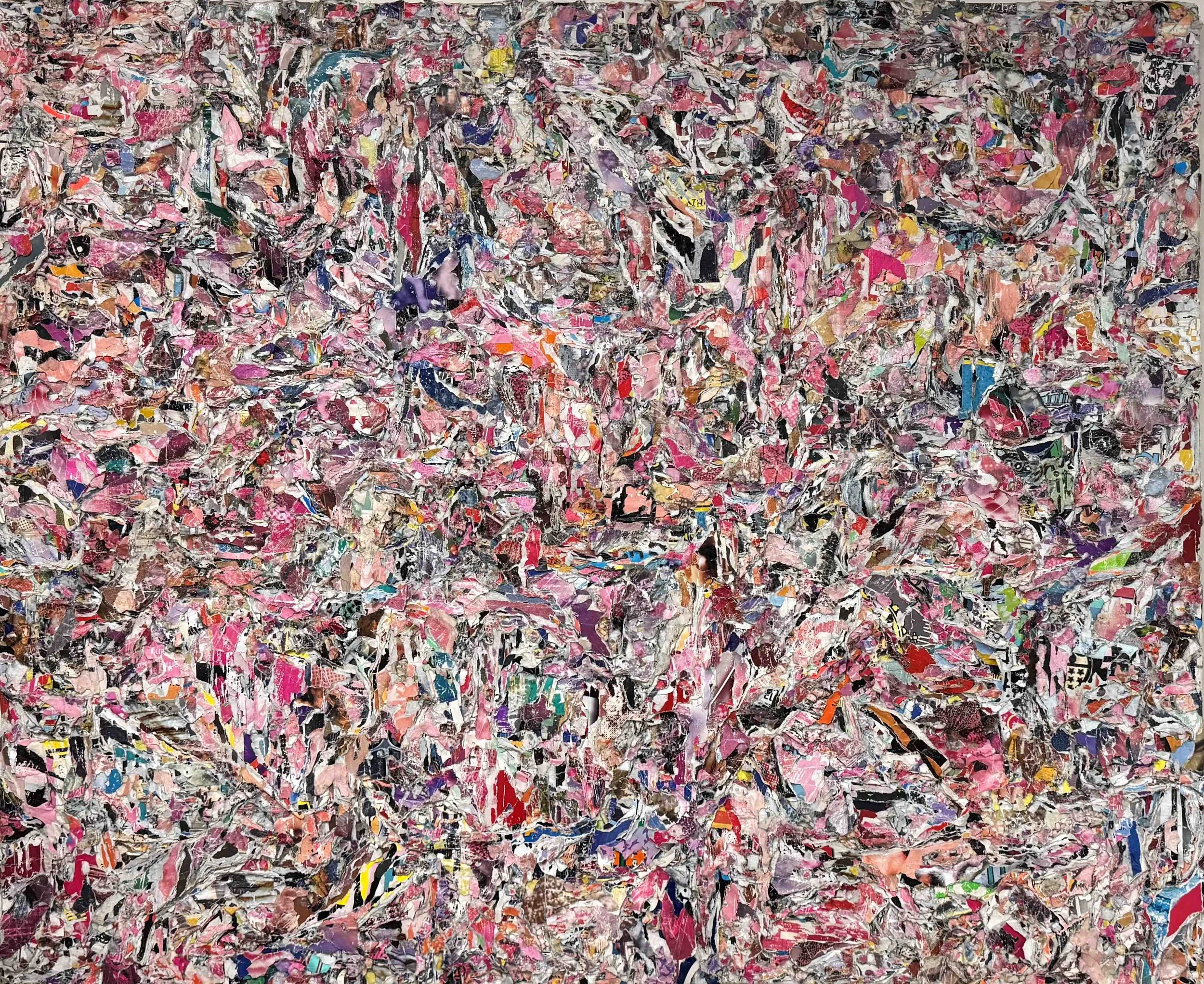
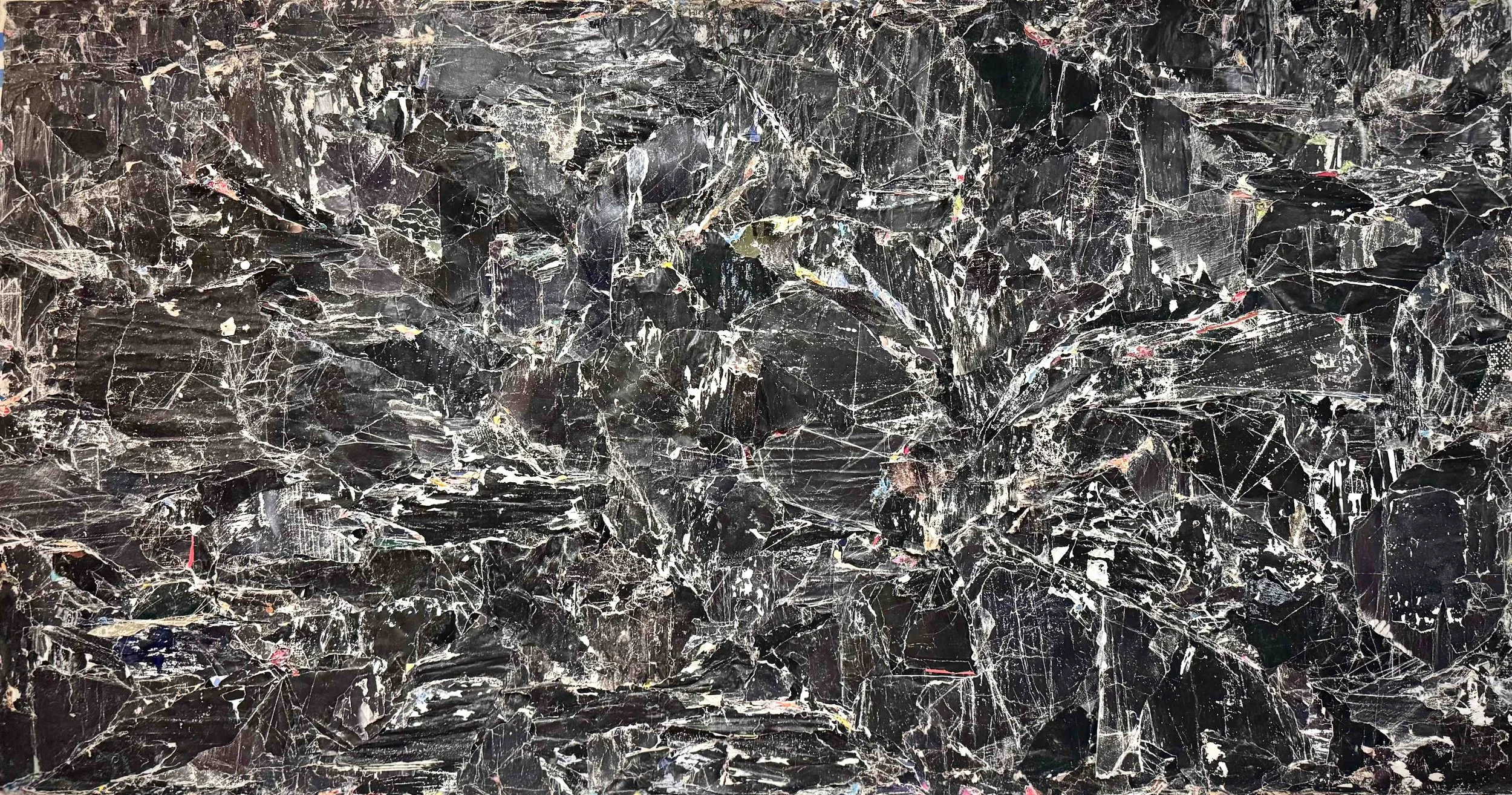
In Eyes Peeled, Thom Flynn presents a body of work that transforms the overlooked surfaces of everyday life into sites of sustained visual inquiry. Drawing from the layered physical and visual environments of the contemporary city, Flynn constructs compositions that exist between collage, excavation, and abstraction, revealing the accumulated traces of human activity embedded within the built landscape.
Thom Flynn navigates the avenues and back streets of Washington, DC, collecting torn street posters and billboards that he assembles into abstract works made of paper. His "paintings" reflect a fascination with uncovering the layers of the city in which he lives, from the seat of power to the surrounding environs of this geopolitical district, through processes of layering, concealment, tearing, and exposure. With Eyes Peeled, Flynn assembles, then lacerates and peels away, layers of paper to create abstract works from the words and images harvested through his self-described "Non-Sanctioned Recycling Program." What is particularly compelling about this body of work is the tension between the commonplace materials he gathers and the excavation he orchestrates to create beautiful, metaphysical commentaries. Fragments of printed imagery, graphic language, color, and texture accumulate over time, forming dense visual fields that resist singular readings. Surfaces appear weathered, disrupted, and reassembled, exposing histories that are simultaneously personal, cultural, and material.
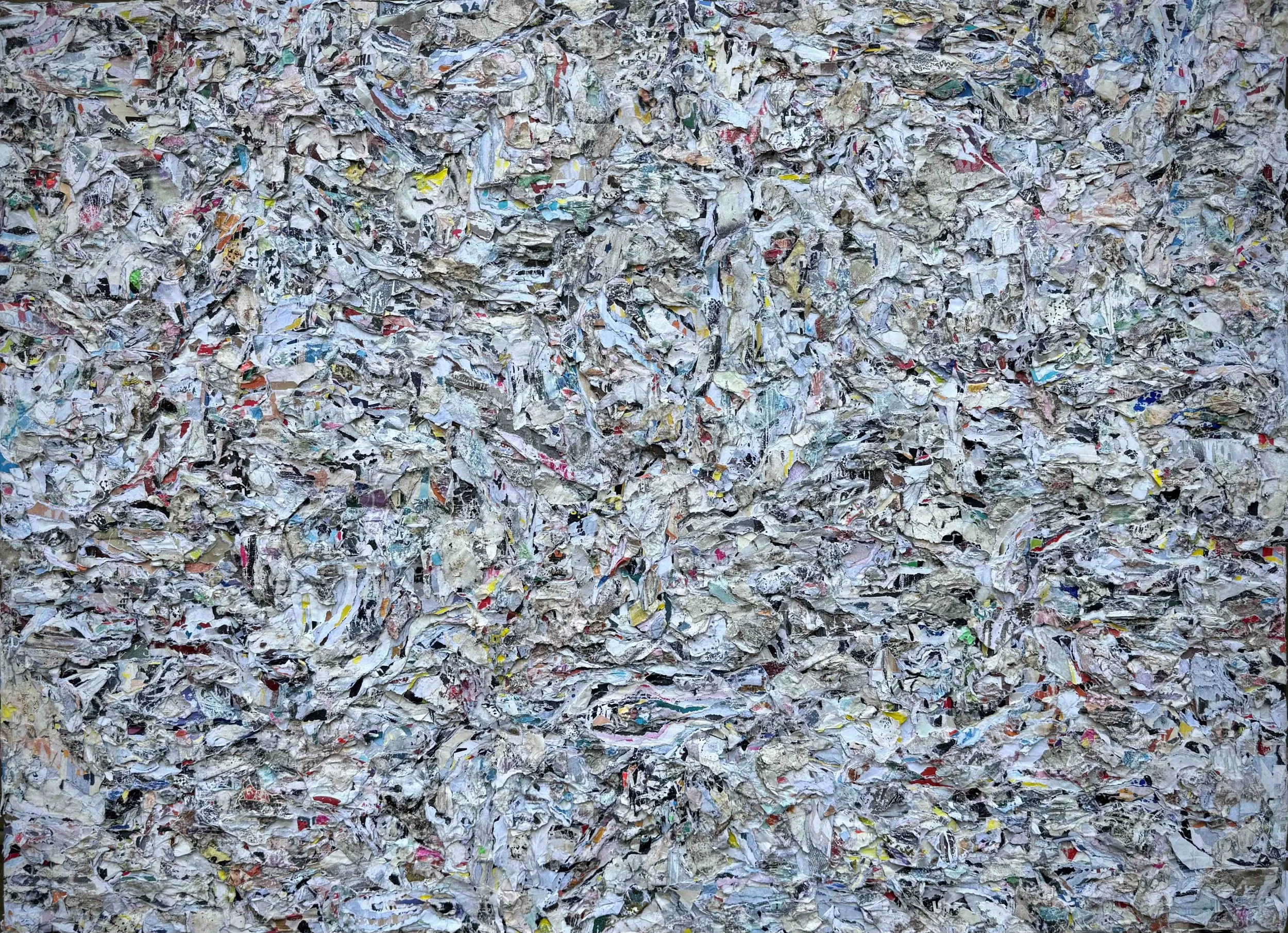
Bit by Bit, 2026
The exhibition's title, Eyes Peeled, points to an act of heightened attention. Flynn asks viewers to look beyond the immediacy of first impressions and engage with the complex networks of information embedded within each work. What initially appears chaotic gradually reveals moments of structure, rhythm, and unexpected connection. The experience mirrors our encounter with the urban environment itself: layers of advertising, protest, memory, and visual debris compete for attention while simultaneously recording the passage of time. Underlying the work is an investigation into how images circulate, deteriorate, and persist. Flynn's surfaces bear the marks of accumulation and erosion, suggesting a visual archaeology of contemporary culture. Fragments are neither fully erased nor completely preserved. Instead, they occupy an intermediate state in which absence and presence coexist, allowing meaning to remain fluid and open-ended.
At a moment defined by the relentless production and consumption of images, Eyes Peeled proposes a slower mode of looking. The exhibition invites viewers to examine what is typically passed over, ignored, or obscured and to consider the ways in which visual experience is shaped by layers of history, place, and memory. Through acts of uncovering and reconstruction, Flynn transforms the discarded and overlooked into records of attention itself.
Artist Statement
Thom Flynn began his “non-sanctioned recycling program” as a student at American University in the late 90’s. Since then he has continued to make abstract compositions comprised of torn street posters and billboards from the urban landscapes of Washington, DC and beyond.
Embedded in the sample culture of various underground music scenes at the time, Flynn endeavored to physically sample the textures of the city. He attributes his involvement in both the club and graffiti scenes for moving him in and around the four quadrants of a largely pre-gentrified DC. It was then/there that he saw the patina of alley walls and boarded up storefronts as both living and shared.
Similar to acts of graffiti and with a questionable legality, Flynn’s self-described “Non-Sanctioned Recycling Program” finds him reclaiming public space through the removal of material instead of more conventional additive gestures. But for him, the similarities stop there. Excavating years of accumulated print adverts by use of a crowbar is a street level intervention that aligns more with those of the Situationist Movement; specifically as an act against the visual noise or spectacle of a hyper-consumerist society. Paralleling further, Flynn’s process requires tuning into the psychogeographical contours of the city to source new batches of posted bills in what can be seen as a communicative exchange with the city itself.
In the studio Flynn seeks to effectively merge the opposing forces of creation and destruction tearing deeper into the layers upon layers of wheat-pasted posters while simultaneously weaving in additional torn facets. The painterly compositions, sans paint, emerge almost organically and oscillate between a state of growth and decay, much like the concrete jungle at large.
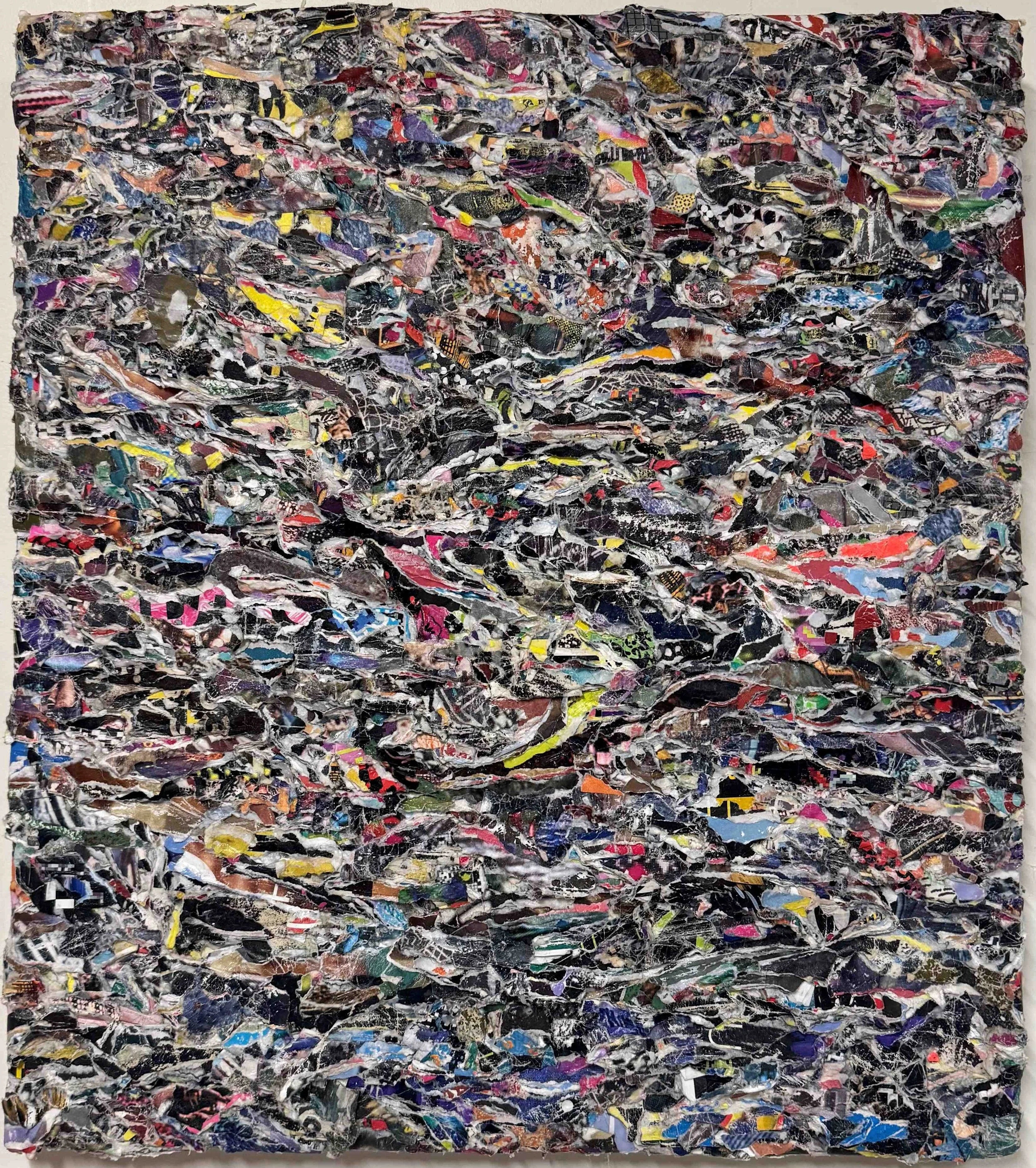
Alexander’s Band, 2025